

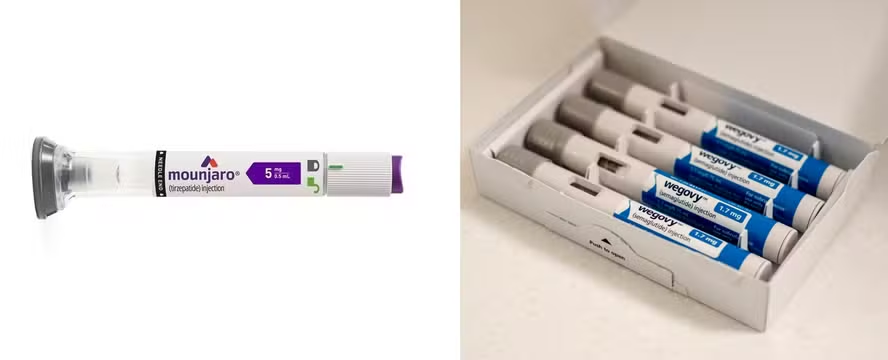
The United Kingdom has issued a renewed health warning concerning a rare but potentially life-threatening condition associated with the use of certain injectable medications for obesity and type 2 diabetes. The Medicines and Healthcare products Regulatory Agency (MHRA), the UK’s medicines regulator, has drawn attention to cases of acute pancreatitis reported in patients using drugs such as Wegovy, produced by Novo Nordisk, and Mounjaro, developed by Eli Lilly.
While the MHRA emphasises that severe cases remain uncommon, the agency has stated that some reported episodes were particularly serious. As a result, healthcare professionals and patients across the United Kingdom are being urged to remain vigilant for early warning signs and to seek urgent medical assessment if symptoms arise.
Medications involved and regulatory context in the United Kingdom
The alert applies to medicines that act on hormonal pathways involved in appetite regulation and glucose metabolism. Wegovy belongs to a class of drugs that mimic the intestinal hormone GLP-1 (glucagon-like peptide-1), while Mounjaro acts on both GLP-1 and GIP (glucose-dependent insulinotropic polypeptide) receptors.
According to the MHRA, similar safety communications have already been issued in the United States, reinforcing international concerns regarding pancreatic inflammation linked to these therapies. The British regulator has not suspended the use of these medicines but has stressed the importance of careful prescribing and ongoing monitoring.
Understanding acute pancreatitis
Acute pancreatitis is an inflammatory condition in which digestive enzymes produced by the pancreas become prematurely activated, leading the organ to effectively digest its own tissue. Clinically, the disease can range from a mild and self-limiting illness to a severe form associated with organ failure and systemic complications.
Medical literature classifies acute pancreatitis as either mild or severe. Mild cases typically involve limited local inflammation, whereas severe pancreatitis may lead to hypotension, respiratory distress, kidney failure and gastrointestinal bleeding. Local complications such as pancreatic necrosis, abscess formation and pseudocysts are also well documented in advanced cases.
Symptoms requiring immediate medical attention
The MHRA has highlighted key symptoms that should prompt urgent evaluation in the United Kingdom. These include intense and persistent abdominal pain, often located in the upper abdomen and radiating to the back, alongside nausea and vomiting.
Clinical sources, including major hospital institutions, note that the pain usually worsens over hours and does not respond adequately to standard analgesics. Additional signs may include fever, dehydration, rapid heart rate and abdominal tenderness. In more severe presentations, bluish or purplish skin discolouration around the navel or along the sides of the abdomen may occur, indicating internal bleeding.
Possible causes and the role of medication
Acute pancreatitis has multiple recognised causes, including gallstones, excessive alcohol consumption, metabolic disorders and certain infections. Several medications — such as chemotherapy agents and antiretroviral drugs — have also been associated with pancreatic inflammation.
Recent regulatory reviews now include weight-loss injections among the potential contributing factors. Eli Lilly has stated that pancreatitis may affect up to one in every 100 users, advising that individuals with a previous history of the condition consult a physician before starting Mounjaro. Novo Nordisk, in turn, has reiterated that its GLP-1-based therapies should only be used under medical supervision and that their overall benefit-risk profile remains favourable.
Treatment and clinical management
The cornerstone of pancreatitis treatment is supportive care, aimed at stabilising the patient. This includes intravenous hydration, pain control and the management of nausea and vomiting. In cases where complications develop — such as infection, respiratory impairment, kidney dysfunction or circulatory instability — targeted interventions are required.
Surgical procedures are reserved for specific situations, particularly when severe structural damage or infected pancreatic tissue is present. Clinical guidelines emphasise that early recognition and prompt treatment significantly reduce the risk of long-term complications.
Ongoing safety monitoring in the United Kingdom
Both pharmaceutical manufacturers have affirmed their commitment to patient safety and ongoing collaboration with healthcare providers in the United Kingdom. Regulatory authorities continue to analyse adverse event reports to ensure that prescribing guidance reflects the latest evidence.
The MHRA advises patients not to discontinue prescribed medication without medical guidance but to seek immediate care if symptoms suggestive of pancreatitis occur. As the use of weight-loss injections continues to expand globally, British health officials underline that informed use and clinical supervision remain essential to safeguarding public health.