

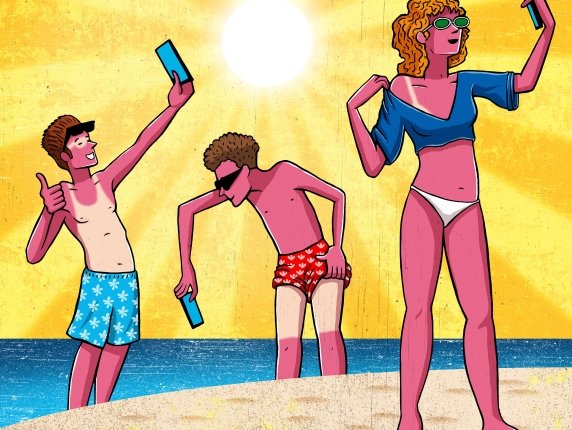

The pursuit of a deeply tanned appearance has regained popularity among many young people, particularly within Italy, where dermatologists have highlighted growing concerns about the influence of social media on sun-related behaviours. Health professionals warn that online beauty trends are encouraging excessive sun exposure and the use of artificial tanning methods, despite decades of scientific evidence linking ultraviolet (UV) radiation to skin cancer.
Experts emphasise that while moderate sunlight plays an important role in human health, unsafe tanning practices can significantly increase the lifetime risk of melanoma and other forms of skin cancer.
Social Media Is Reshaping Attitudes Towards Sun Exposure
Dermatologists report that digital platforms have become an increasingly influential source of health and beauty information for adolescents and young adults. Images promoting deeply bronzed skin, together with viral tanning challenges, may create unrealistic beauty standards and encourage prolonged exposure to ultraviolet radiation.
Public health specialists are particularly concerned that online misinformation is leading some individuals to underestimate the dangers of UV exposure or believe unsupported claims regarding tanning methods. Scientific organisations consistently advise that information relating to skin health should be obtained from qualified healthcare professionals rather than unverified social media content.
Artificial Tanning Remains a Proven Cancer Risk
The World Health Organization's International Agency for Research on Cancer (IARC) classifies ultraviolet-emitting tanning devices as Group 1 carcinogens, placing them in the highest category of cancer-causing agents based on available scientific evidence.
Numerous epidemiological studies have shown that the use of sunbeds before the age of 35 substantially increases the risk of developing melanoma, the deadliest form of skin cancer. UV radiation also contributes to basal cell carcinoma and squamous cell carcinoma, the two most common types of skin malignancy.
In addition to increasing cancer risk, repeated UV exposure accelerates skin ageing by damaging collagen and elastin fibres, leading to wrinkles, pigmentation changes and loss of skin elasticity.
Sunlight Provides Health Benefits—When Exposure Is Balanced
Health experts stress that sunlight should not be viewed solely as harmful. Appropriate exposure contributes to vitamin D synthesis, which supports bone health and plays a role in normal immune function. Research has also associated sensible sunlight exposure with improvements in mood and regulation of circadian rhythms.
However, specialists underline that these benefits can be achieved without prolonged sunbathing or intentional burning. The greatest danger comes from excessive ultraviolet exposure, particularly repeated episodes of sunburn during childhood and early adulthood, which are recognised risk factors for melanoma later in life.
Photoprotection Should Match Individual Skin Type
Dermatologists recommend tailoring sun protection according to each person's skin phototype. Individuals with fair skin, light eyes and freckles generally burn more easily and require higher levels of protection than those with darker complexions. Nevertheless, experts emphasise that no skin type is completely immune to UV-induced damage or skin cancer.
Evidence-based recommendations for safe sun exposure include:
Applying a broad-spectrum sunscreen with adequate SPF at least 20–30 minutes before sun exposure.
Reapplying sunscreen approximately every two hours, particularly after swimming or excessive sweating.
Wearing protective clothing, sunglasses and wide-brimmed hats.
Avoiding prolonged exposure during peak UV hours.
Gradually increasing sun exposure rather than attempting to tan rapidly.
Preventing Sunburn Is Essential for Long-Term Skin Health
Medical researchers continue to identify sunburn as one of the clearest indicators of excessive UV damage. Repeated burns can produce permanent DNA damage within skin cells, increasing the likelihood of cancerous mutations over time.
Specialists in Italy therefore encourage the public—particularly adolescents and young adults—to prioritise skin protection over temporary cosmetic trends. They emphasise that healthy skin is achieved through responsible sun exposure, regular use of sunscreen and informed decisions based on scientific evidence rather than social media popularity.
As skin cancer incidence continues to rise globally, healthcare professionals conclude that education, prevention and early adoption of safe sun habits remain among the most effective strategies for protecting long-term public health.