

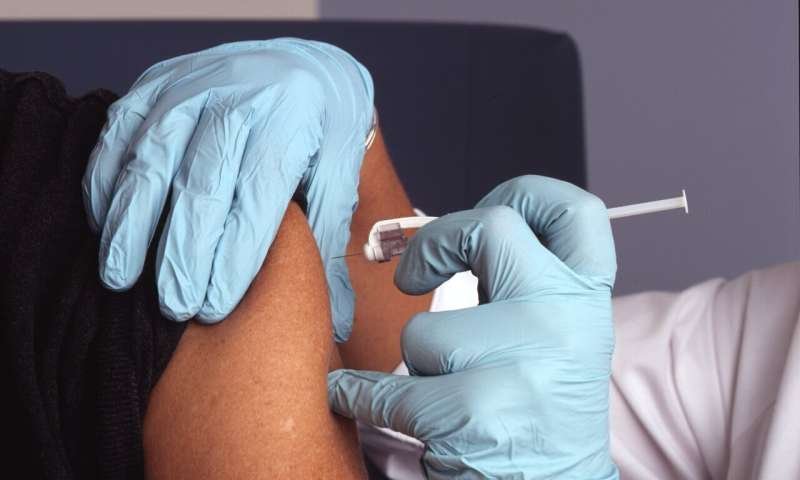

Scientists in the United Kingdom have identified a promising strategy that may improve the effectiveness of vaccines in people whose immune systems respond less efficiently, including older adults and individuals with weakened immunity. Researchers at the University of Cambridge found that low doses of sodium valproate, a medicine widely prescribed for epilepsy, significantly enhanced immune responses when administered alongside seasonal influenza vaccination.
The findings, published in the peer-reviewed journal Nature Communications, suggest that the established medication could potentially be repurposed as a vaccine adjuvant—a substance used to improve the body's immune response to vaccination. However, researchers emphasise that additional clinical trials are required before the approach can be adopted in routine medical practice.
Improving Immune Memory After Vaccination
Vaccines work by stimulating the immune system to recognise harmful viruses or bacteria, allowing the body to respond rapidly if exposure occurs in the future. A critical component of this protection is the development of long-lasting immune memory, which enables specialised immune cells to identify pathogens months or even years after vaccination.
Although vaccines are highly effective for most individuals, immune responses tend to weaken with age or in people with compromised immune systems. As a result, some individuals develop lower levels of protective antibodies or require additional booster doses to maintain immunity.
The Cambridge researchers investigated whether an existing medicine could enhance the formation of immune memory, thereby improving the durability and strength of vaccine-induced protection.
Repurposing an Established Medicine
Rather than developing an entirely new drug, the research team explored medicines with well-established safety records that might be suitable for a different clinical purpose. Using advanced genetic analysis, they examined how more than 30,000 compounds influenced human immune cells and identified a group of medicines capable of promoting characteristics associated with long-lived immune memory.
Among these, sodium valproate demonstrated particularly promising effects when administered at doses substantially lower than those typically used to treat epilepsy.
Laboratory experiments indicated that the medication altered epigenetic mechanisms—biological processes that regulate gene activity without changing DNA itself—encouraging immune cells to develop into long-lasting memory cells capable of responding more effectively to future infections.
Clinical Trial Demonstrates Stronger Vaccine Responses
The researchers evaluated the approach in a controlled clinical study involving 74 healthy adults in the United Kingdom, all of whom received the seasonal influenza vaccine.
Participants receiving low-dose sodium valproate alongside vaccination produced more than twice the number of influenza-specific antibodies compared with those receiving the vaccine alone. They also generated approximately ten times more influenza-specific CD8 T cells, specialised immune cells responsible for identifying and destroying virus-infected cells.
In addition, the immune responses appeared broader, suggesting the possibility of improved protection against different influenza virus variants.
Importantly, the low doses used during the study were not associated with the side effects commonly observed during long-term, high-dose treatment for neurological disorders.
Potential Benefits for Older Adults
The investigators believe the strategy could be particularly valuable for older adults, whose immune systems naturally become less responsive with advancing age. Reduced vaccine effectiveness in this population contributes to increased susceptibility to respiratory infections such as influenza and COVID-19.
Because sodium valproate is already licensed internationally and has been extensively studied over several decades, researchers suggest that repurposing it may accelerate future clinical development compared with entirely new medicines. Nevertheless, they stress that further research is essential to confirm its safety and effectiveness when used specifically as a vaccine-enhancing therapy.
Next Phase of Research
The research team plans to conduct additional studies involving older adults to determine whether the encouraging immune responses observed in healthy volunteers can be reproduced in populations most likely to benefit.
If these investigations are successful, larger clinical trials will be needed before regulatory authorities consider approval for this new therapeutic use.
While the findings represent an important advance in vaccine research, scientists emphasise that sodium valproate should not be used alongside vaccination outside approved clinical studies until further evidence confirms its safety, optimal dosage and clinical benefit for this purpose.