

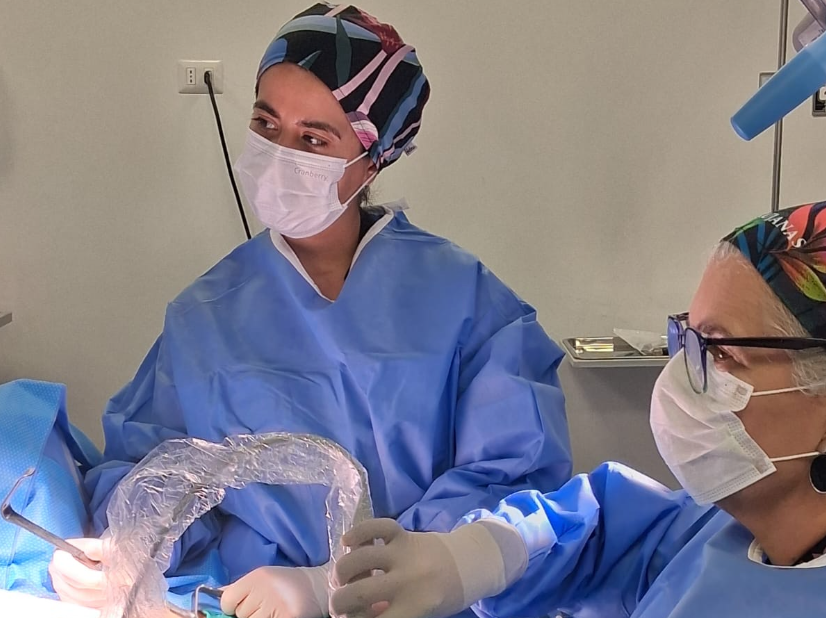
A public hospital in Chile has introduced an advanced surgical localisation technique using magnetic seeds to improve the accuracy of breast cancer procedures. The innovation, recently adopted at Hospital Villarrica in Chile, represents a significant development in the diagnosis and surgical management of breast malignancies within the country’s healthcare network.
The implementation forms part of a broader effort in Chile to strengthen specialised breast care services. Over the past year, the hospital has expanded its multidisciplinary breast unit by integrating additional specialists, introducing new imaging technologies and incorporating advanced surgical tools designed to improve patient outcomes.
A New Approach to Lesion Localisation
The magnetic seed localisation technique involves placing small paramagnetic markers into targeted areas of breast tissue or selected lymph nodes before surgery. During the procedure, surgeons use a dedicated detection device capable of identifying the magnetic signal, enabling them to locate non-palpable lesions with increased accuracy.
Specialists in Chile explain that this method assists surgical teams in identifying abnormal tissue even when it cannot be detected through physical examination. Medical research published in oncology and radiology journals has shown that preoperative lesion localisation technologies significantly improve tumour removal precision while preserving surrounding healthy tissue.
Magnetic localisation methods are increasingly recognised internationally as alternatives to traditional wire-guided techniques. Clinical studies, including those published in peer-reviewed surgical journals, suggest that magnetic seed localisation can provide logistical advantages, including improved patient comfort and scheduling flexibility, while maintaining high levels of surgical accuracy.
Supporting Minimally Invasive Axillary Procedures
One of the most important benefits associated with the technique introduced in Chile is its contribution to less invasive surgical approaches in the axillary region, where lymph nodes are located. In breast cancer management, evaluating lymph node involvement is essential for staging the disease and guiding treatment decisions.
The use of sentinel lymph node biopsy, widely accepted in global oncology guidelines, allows surgeons to remove only the first lymph node or nodes most likely to contain cancer cells. Research published by organisations such as the American Society of Clinical Oncology demonstrates that this approach reduces surgical complications compared with full lymph node dissection.
Healthcare professionals in Chile report that combining the traditional sentinel lymph node method with magnetic localisation enhances detection accuracy. By enabling dual identification of affected lymph nodes, the technique reduces the likelihood of unnecessary removal of healthy nodes, which is associated with complications such as lymphoedema, reduced mobility and chronic discomfort.
Benefits for Patients Undergoing Preoperative Chemotherapy
The technique has also shown particular relevance for patients in Chile receiving neoadjuvant chemotherapy, which involves administering chemotherapy before surgical tumour removal. This treatment is commonly used in cases of more aggressive or advanced breast cancer to reduce tumour size and improve surgical outcomes.
Medical specialists in Chile indicate that magnetic seed localisation can assist in accurately identifying lymph nodes previously affected by cancer following chemotherapy. Scientific evidence from international breast cancer research highlights that accurately tracking these nodes is crucial for evaluating treatment response and determining the extent of surgery required.
Expanding Diagnostic and Imaging Capabilities
The introduction of magnetic seed technology in Chile coincides with the expansion of advanced breast imaging techniques, including contrast-enhanced mammography. This imaging modality improves the detection of suspicious lesions by providing enhanced visualisation of vascular patterns commonly associated with malignancies.
Research published in radiology and oncology journals supports the use of advanced imaging to increase early detection rates and improve surgical planning. Healthcare authorities in Chile consider these technological advancements essential to strengthening breast cancer care and improving long-term survival outcomes.
Strengthening Cancer Care Infrastructure in Chile
Breast cancer remains one of the most prevalent cancers affecting women globally, and improving early diagnosis and surgical accuracy is considered a major public health priority. Health services in Chile are increasingly investing in specialised equipment and training to enhance oncology treatment capabilities.
Experts emphasise that innovations such as magnetic seed localisation align with global trends towards personalised and minimally invasive cancer treatment. International oncology studies suggest that precise surgical targeting not only improves clinical outcomes but also contributes to faster recovery and better quality of life for patients.
The adoption of this technology in Chile represents an important step in modernising breast cancer management within the country’s public healthcare system. As healthcare providers continue to integrate innovative diagnostic and surgical tools, specialists in Chile highlight the importance of combining technological progress with multidisciplinary clinical expertise to optimise patient care and treatment effectiveness.