

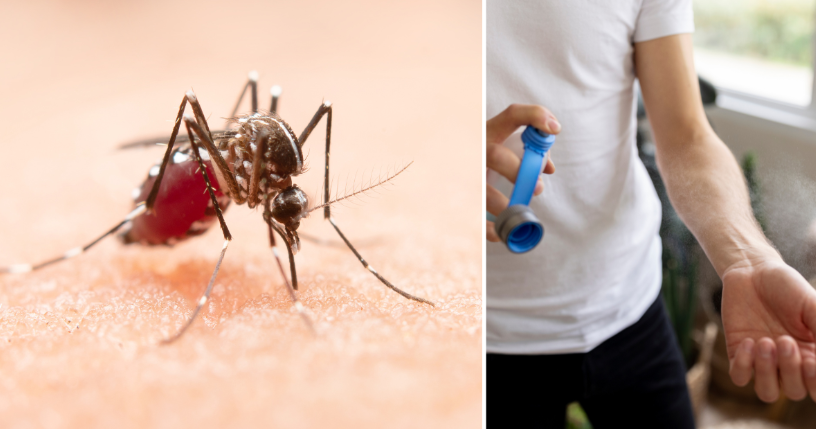
Health authorities in Chile have heightened epidemiological surveillance after confirming the presence of the mosquito Aedes aegypti, a known carrier of dengue and other arboviral diseases. The insect was identified in storage areas at Santiago’s international airport, prompting public health concern due to its role in transmitting infections such as dengue fever, Zika virus, chikungunya and yellow fever.
Although no locally acquired cases of arboviral diseases have been reported in Chile to date, the Ministry of Health has declared a sanitary alert covering regions from Arica and Parinacota in the north to Los Ríos in the south. Officials in Chile have also strengthened monitoring and vector-control strategies to minimise the risk of disease transmission associated with this mosquito species.
The Vector and Its Environmental Requirements
Medical specialists in Chile emphasise that dengue is a viral infectious disease transmitted primarily through the bite of infected female mosquitoes. The Aedes aegypti species is commonly found in tropical and subtropical climates, where warm temperatures and humidity provide favourable breeding conditions.
According to entomological and epidemiological research, the mosquito requires stagnant water deposits to reproduce. Studies published by organisations such as the World Health Organization indicate that urban environments with accessible water containers can facilitate mosquito proliferation. In Chile, experts warn that rainfall combined with rising temperatures can create suitable breeding conditions, increasing the importance of environmental control measures.
The mosquito, originally native to Africa, can be visually distinguished from common domestic species by its black body, transparent wings and distinctive white markings on the head, legs and thorax. Scientific observations suggest that female mosquitoes rely on blood meals to develop eggs, which can number between 100 and 200 during a reproductive cycle.
Recognising Symptoms of Dengue Infection
Healthcare professionals in Chile highlight that recognising dengue symptoms can be challenging because they may resemble influenza or other viral respiratory illnesses, which are more common in temperate climates. As dengue remains relatively uncommon in Chile, misinterpretation of early symptoms may delay diagnosis.
Clinical references from institutions such as the Mayo Clinic describe dengue as typically presenting with sudden high fever, frequently exceeding 39°C. Additional symptoms may include severe headache, muscle and joint pain, nausea, vomiting, skin rash and swelling of lymph nodes. Retro-orbital pain, characterised by discomfort behind the eyes, is also considered a common indicator of infection.
Medical literature emphasises that early identification of dengue symptoms is essential for effective patient monitoring. Although many cases resolve without complications, severe forms of the disease can lead to haemorrhagic manifestations and require urgent medical care. Public health authorities in Chile encourage individuals experiencing symptoms following mosquito exposure to seek immediate medical evaluation.
Urban Adaptability and Risk of Transmission
One of the principal concerns among health experts in Chile relates to the mosquito’s ability to adapt to urban environments. Research from global public health agencies confirms that Aedes aegypti frequently breeds in artificial water containers, including buckets, plant pots, discarded tyres, blocked drainage systems and uncovered water storage facilities.
The adaptability of the mosquito increases the likelihood of disease transmission in densely populated areas. Public health specialists in Chile note that behavioural changes among residents are essential to reduce breeding opportunities. Routine inspection of outdoor spaces, particularly following rainfall, is considered a key preventive measure.
Authorities also recommend maintaining swimming pools and ornamental water features with appropriate chlorination levels to prevent mosquito development. Epidemiological studies have consistently shown that community-based vector control significantly reduces the spread of mosquito-borne diseases.
Preventive Strategies and Public Awareness
Health professionals in Chile advise implementing several precautionary measures to reduce exposure to mosquito bites and limit breeding sites. These include eliminating stagnant water near residential areas, installing protective screens on doors and windows and applying insect repellents to exposed skin.
Additionally, medical experts in Chile stress the importance of travel-related awareness. Individuals travelling to regions where dengue and other arboviruses are endemic are encouraged to seek pre-travel health advice and remain vigilant for symptoms after returning. International public health research indicates that travel-related cases can contribute to the introduction of vector-borne diseases in previously unaffected areas.
Broader Public Health Implications
The detection of Aedes aegypti in Chile reflects a growing global concern regarding the geographic expansion of mosquito-borne diseases, often linked to climate change, urbanisation and international travel. Scientific studies published in journals such as The Lancet Planetary Health suggest that shifting environmental conditions may expand the habitats suitable for disease-carrying mosquitoes.
Public health authorities in Chile continue to emphasise that preventing the establishment of mosquito populations is essential to avoiding local transmission of dengue and other arboviral infections. The current surveillance measures aim to contain the vector before it becomes widely established within the country.
As Chile reinforces its preventive strategies, health experts stress that community participation remains fundamental to controlling mosquito proliferation. Early awareness, environmental management and timely medical intervention are considered crucial components in reducing the potential public health impact of dengue and related diseases.