

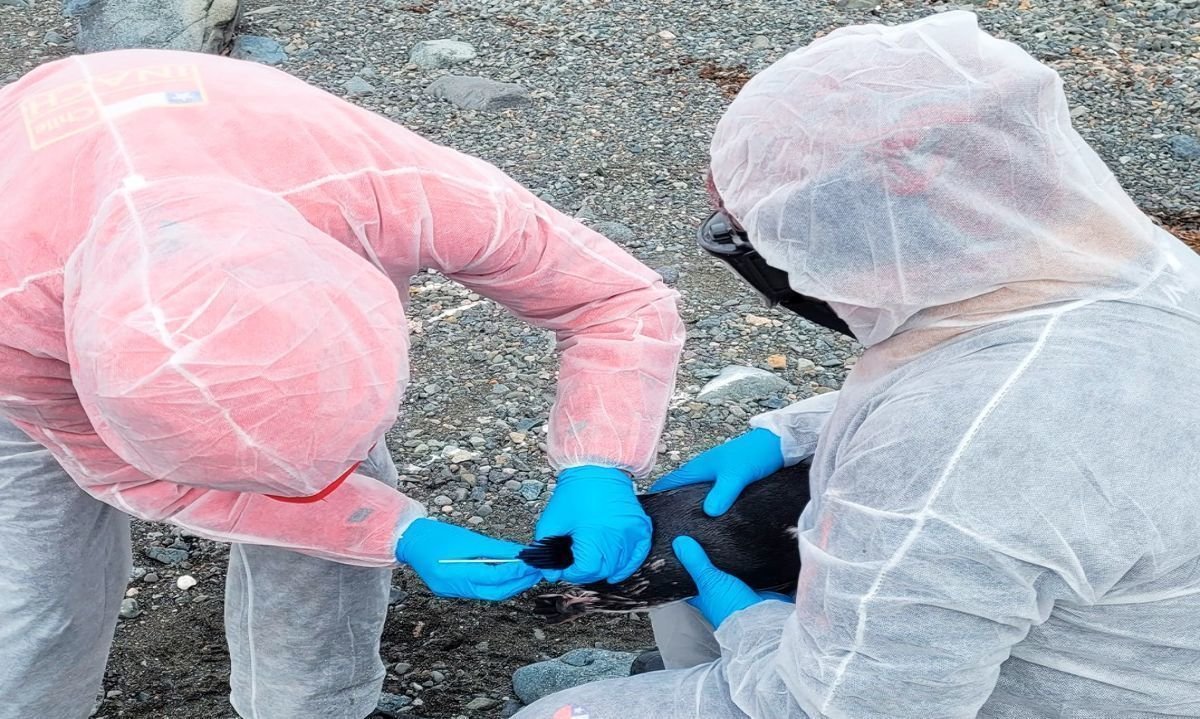
The re-emergence of infectious diseases in remote and extreme regions continues to raise concern among health and scientific authorities. In Chile, researchers have confirmed that highly pathogenic avian influenza H5N1 has been detected in Antarctica for the third consecutive year, affecting both bird species and marine mammals, reinforcing the need for sustained sanitary surveillance in polar environments.
The monitoring programme is led by the Chilean Antarctic Institute (INACH) in collaboration with the University of Chile, under the coordination of researchers Marcelo González and Víctor Neira. The initiative integrates field surveillance, laboratory diagnostics and logistical support for scientific expeditions, with the objective of strengthening early detection and understanding the behaviour of the virus in extreme ecosystems.
Advanced Diagnostic Capacity in Antarctic Bases
During the 2025–2026 Antarctic campaign, the research team maintained operational diagnostic facilities at Base Escudero and Base O’Higgins, incorporating real-time PCR molecular testing. This technology is considered a cornerstone of early detection strategies for avian influenza H5N1, allowing for rapid identification of suspected cases and timely sanitary responses.
Surveillance efforts were further expanded through monitoring activities along the logistical route of the Chilean vessel Betanzos, extending the geographical coverage of the programme and enabling sample collection across multiple Antarctic locations.
Detection in Wildlife Populations
Fieldwork has focused on identifying abnormal mortality events, sampling animals displaying symptoms compatible with infection and monitoring apparently healthy populations. Near Base O’Higgins, sampling conducted on surrounding islands revealed deceased gentoo penguins and Antarctic fur seals. To date, two confirmed H5N1-positive cases have been identified in Antarctic fur seals, while additional samples remain under laboratory analysis.
At Base Escudero, surveillance across several sectors of King George Island recorded marine birds and penguins considered suspicious; however, no laboratory-confirmed cases had been reported at the time of the latest update. Meanwhile, surveillance associated with the Betanzos vessel confirmed the presence of the virus in an Antarctic cormorant in Margarita Bay, further supporting evidence of the virus’s continued circulation in the region.
Shifts in Epidemiological Behaviour
Data collected over recent Antarctic seasons suggest notable changes in the epidemiological dynamics of avian influenza H5N1. During the 2022–2023 summer season, no cases were detected. In contrast, the 2023–2024 period saw infections emerge later in the season, primarily affecting brown skuas.
The 2024–2025 season marked a rise in detected cases, with earlier identification and a greater impact on Antarctic fur seals. In the current 2025–2026 campaign, although the overall number of cases appears lower, a higher proportion of mortality has been observed among marine mammals. This shift raises new scientific questions regarding interspecies transmission and the potential long-term impact on fragile polar ecosystems.
Ongoing Research and Global Health Implications
Chilean researchers emphasise that continued monitoring by INACH and the University of Chile has been essential in identifying infections across different species, providing critical data for wildlife conservation and sanitary risk assessment. In the coming weeks, the team will proceed with genetic sequencing of confirmed cases to better understand the virus’s origin, diversity and circulation patterns in Antarctica.
The repeated detection of avian influenza H5N1 in Antarctica underscores the importance of coordinated, long-term surveillance efforts. From a global health perspective, monitoring zoonotic pathogens in extreme environments is vital not only for protecting wildlife, but also for preventing the spread of viruses to new species and regions, reinforcing the interconnected nature of animal, environmental and public health.